

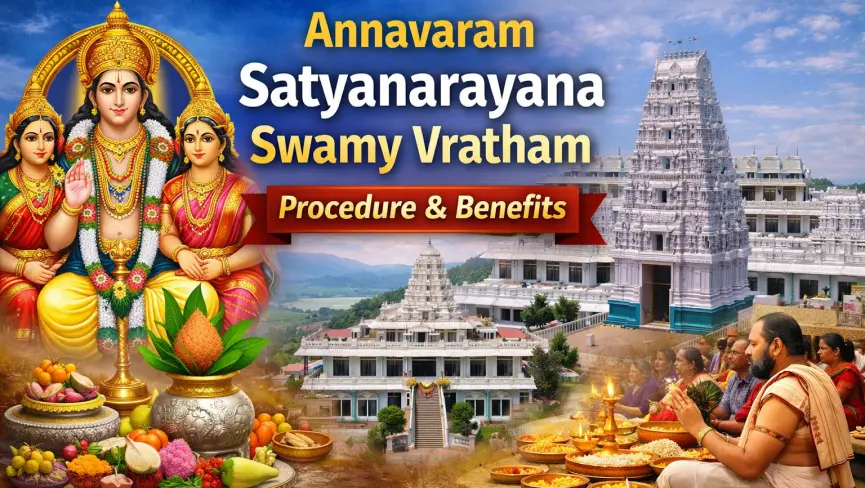
Annavaram Satyanarayana Swamy Vratham Procedure & Benefits - Complete Guide
- Entry & Registration: Devotees enter the vratham hall on the ground floor and obtain tickets through online or offline counters.
- Sankalpam: The priest guides devotees to take a sacred vow by stating name, gothram, and purpose of the vratham.
- Kalasha Sthapana: Sacred water is placed in a kalasham and Lord Satyanarayana is invoked through mantras.
- Ganapathi Puja: Performed to remove obstacles and ensure successful completion of the vratham.
- Satyanarayana Katha: The priest narrates the five chapters highlighting the importance of truth and devotion.
- Maha Prasadam: Payasam is offered to the Lord and distributed as prasadam.
- Mangala Harathi: Final prayers and blessings conclude the vratham.
Duration: Approximately 60–90 minutes. Rules & Dress Code
- Traditional attire is recommended
- Men: Dhoti / Pancha
- Women: Saree / Salwar Kameez
- Maintain silence and follow priest instructions
- Avoid non-vegetarian food and alcohol before vratham
Benefits of Annavaram Satyanarayana Swamy Vratham
Vratham Ticket Prices
| Ticket Type | Price (INR) |
|---|---|
| General Vratham | ₹500 |
| Vratham with Prasadam | ₹750 |
| Special Vratham | ₹1,000 – ₹1,500 |
- Online: Book through the official Annavaram temple website.
- Offline: Tickets are available at temple counters. Early arrival is advised.
What is Annavaram Satyanarayana Swamy Vratham?
Annavaram Satyanarayana Swamy Vratham is a sacred Hindu ritual dedicated to Lord Satyanarayana Swamy, performed to seek blessings for prosperity, peace, good health, and fulfillment of wishes. It is especially significant when performed at the Annavaram temple.
Who can perform Annavaram Satyanarayana Swamy Vratham?
Any devotee, including married couples, unmarried individuals, families, and elders, can perform Annavaram Satyanarayana Swamy Vratham with devotion and faith.
Where is Annavaram Satyanarayana Swamy Temple located?
The :contentReference[oaicite:0]{index=0} is located in Annavaram village of East Godavari district, Andhra Pradesh, situated on Ratnagiri hill between the Pampa and Sarayu rivers.
What is the significance of Satyanarayana Swamy Vratham at Annavaram?
Annavaram is considered the most sacred place to perform Satyanarayana Swamy Vratham, as the deity is believed to grant blessings quickly to devotees who perform the Vratham here.
What are the benefits of performing Annavaram Satyanarayana Swamy Vratham?
The Vratham is believed to bring prosperity, family harmony, success in business or career, relief from difficulties, and spiritual growth.
On which days is Annavaram Satyanarayana Swamy Vratham performed?
The Vratham is performed daily at Annavaram temple, with special significance on Pournami, Ekadashi, and other auspicious days.
What is the best time to perform Satyanarayana Swamy Vratham at Annavaram?
The best time to perform the Vratham is in the morning hours, usually between 6:00 AM and 12:00 PM, as per temple schedule.
Is prior booking required for Annavaram Satyanarayana Swamy Vratham?
Generally, prior booking is not mandatory. Devotees can book the Vratham ticket at the temple counter on the same day.
How to book Annavaram Satyanarayana Swamy Vratham online?
Online booking, if available, can be done through the official Annavaram temple website. Availability may vary depending on temple administration.
What is the cost of Satyanarayana Swamy Vratham at Annavaram?
The Vratham ticket cost is affordable and decided by the temple authorities. Prices may change, so devotees are advised to check the latest rates before visiting.
What items are provided by the temple for the Vratham?
The temple provides all essential pooja materials such as turmeric, kumkum, flowers, prasad, Vratham book, and offerings.
Do devotees need to bring any pooja materials for the Vratham?
No, devotees are not required to bring any pooja items, as everything needed for the Vratham is arranged by the temple.
What is the complete procedure of Annavaram Satyanarayana Swamy Vratham?
The procedure includes Ganapathi pooja, Kalasha pooja, reading of Satyanarayana Vratha Katha, offering of prasadam, and Mangala Harathi conducted by temple priests.
How long does Annavaram Satyanarayana Swamy Vratham take?
The entire Vratham usually takes about 1 to 1.5 hours to complete.
Can couples perform Satyanarayana Swamy Vratham together at Annavaram?
Yes, married couples are encouraged to perform the Vratham together for family welfare and marital harmony.
Can unmarried devotees perform Annavaram Satyanarayana Swamy Vratham?
Yes, unmarried devotees can also perform the Vratham to seek blessings for good education, career, and future marriage.
Is Satyanarayana Swamy Vratham performed daily at Annavaram?
Yes, the Vratham is conducted daily at the Annavaram temple as per the temple schedule.
Are children allowed to attend the Vratham?
Yes, children are allowed and can sit along with their parents during the Vratham.
What dress code should be followed for Annavaram Satyanarayana Swamy Vratham?
Devotees are advised to wear traditional and modest attire. Men usually wear dhoti or formal clothing, while women prefer sarees or salwar kameez.
Is prasadam provided after the Satyanarayana Swamy Vratham?
Yes, prasadam is distributed to all devotees after the completion of the Vratham.
What is the spiritual importance of performing Vratham at Annavaram temple?
Performing the Vratham at Annavaram is believed to enhance spiritual merit, remove obstacles, and bring divine grace of Lord Satyanarayana Swamy.
Can Satyanarayana Swamy Vratham be performed for family welfare?
Yes, many devotees perform the Vratham specifically for family well-being, health, peace, and prosperity.
Is photography allowed during Annavaram Satyanarayana Swamy Vratham?
Photography and videography are generally restricted inside the Vratham halls. Devotees should follow temple rules.
What are the rules devotees must follow during the Vratham?
Devotees should maintain silence, follow priest instructions, switch off mobile phones, and participate with devotion throughout the Vratham.
Is accommodation available near Annavaram temple for Vratham devotees?
Yes, temple-managed guest houses and private lodges are available near Annavaram temple for devotees performing the Vratham.