
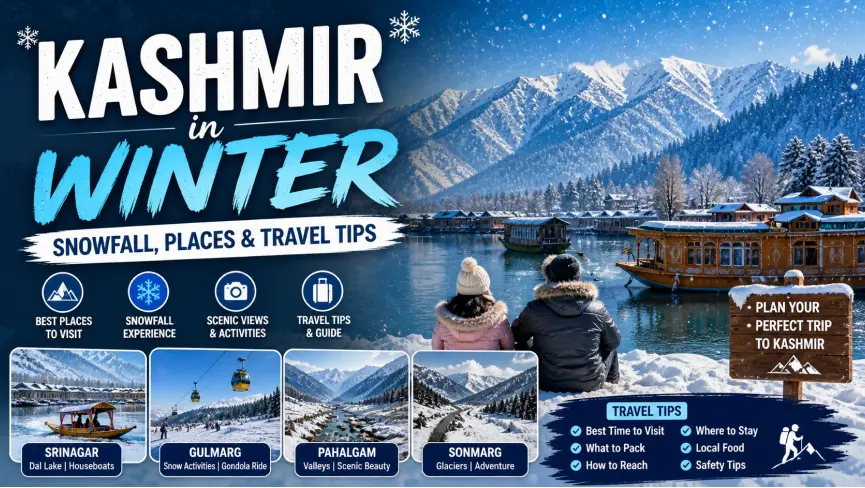
Kashmir in Winter Snowfall, Places & Travel Tips | Complete Guide 2026
Why Visit Kashmir in Winter?
When the last autumn leaf falls from the chinar trees, Kashmir undergoes a magical metamorphosis. The valleys, meadows, and mountain peaks transform into a breathtaking canvas of white. While most travelers flock to Kashmir in spring and summer, the winter months — November through February — reveal a side of the valley that is raw, enchanting, and deeply soulful.
Winter Kashmir is not just about snowfall. It's about waking up to a silent white morning in Srinagar, sipping noon chai (pink Kashmiri tea) in a warm houseboat, riding a gondola over the frozen Gulmarg slopes, and witnessing a landscape that looks like it was carved from a fairy tale. If you're a nature lover, adventure seeker, or someone who simply wants to escape the ordinary, Kashmir in winter is your answer.
"Kashmir in winter is not a destination — it's an experience that seeps into your soul and stays long after the snow has melted."
Despite misconceptions about accessibility and safety, Kashmir is entirely navigable in winter, and many seasoned travelers consider it the most rewarding time to visit. The crowds thin out, prices dip significantly, and you get a more authentic, intimate experience of Kashmiri culture and hospitality.
Snowfall Season & What to Expect
Understanding Kashmir's snowfall pattern helps you plan the perfect trip — whether you want to ski fresh powder in Gulmarg or simply see a snowflake for the first time from the warmth of a Srinagar houseboat.
Early Snowfall — The First Kiss of Winter
Higher altitudes like Gulmarg and Sonamarg receive their first snowfall. Srinagar stays cool but largely snow-free. Ideal for those who want autumn colours alongside snow-capped peaks.
Chillai Kalan — The Harshest 40 Days
This is Kashmir's peak winter period, locally called "Chillai Kalan." Heavy snowfall blankets the entire valley including Srinagar. Temperatures dip to -10°C in the city and -20°C in higher regions. The Dal Lake may partially freeze.
Chillai Khurd — Mild Winter, Magical Snow
Temperatures begin to moderate slightly. Snow is still abundant but the bitter cold eases. February is often considered the sweet spot — great snowfall, relatively accessible roads, and the Gulmarg Ski Festival usually happens around this time.
Chillai Bachha — Transition to Spring
Late winter merges into early spring. Snow starts melting in the valley but higher peaks remain white. The famous almond blossoms begin to appear, creating a magical combination of snow and flowers.
| Month | Min Temp | Max Temp | Snow Level |
|---|---|---|---|
| November | -2°C | 12°C | Higher altitudes only |
| December | -7°C | 5°C | Heavy (all areas) |
| January | -10°C | 3°C | Very heavy (peak) |
| February | -6°C | 8°C | Heavy to moderate |
| March | -1°C | 14°C | Melting in valley |
Top Places to Visit in Winter Kashmir
Kashmir in winter is a collection of distinct experiences spread across valleys, lakes, and mountains. Here are the must-visit destinations that come alive in the snow season:
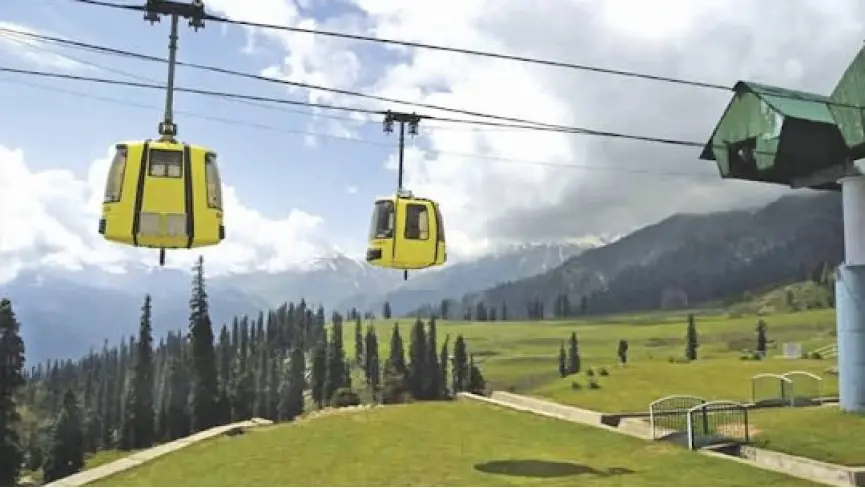
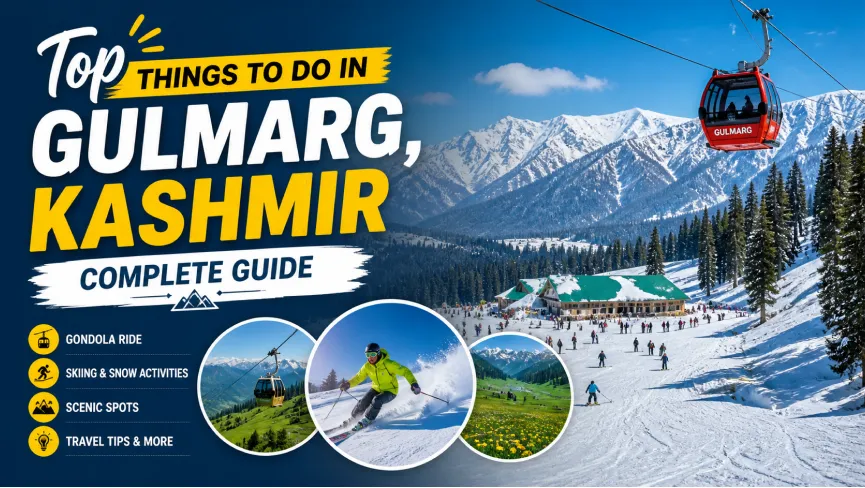
Home to one of Asia's highest gondola rides and India's premier ski resort. Gulmarg receives up to 4–6 feet of snow and is the crown jewel of Kashmir winter. The Gondola ride to Apharwat Peak (4,200m) offers jaw-dropping panoramas.
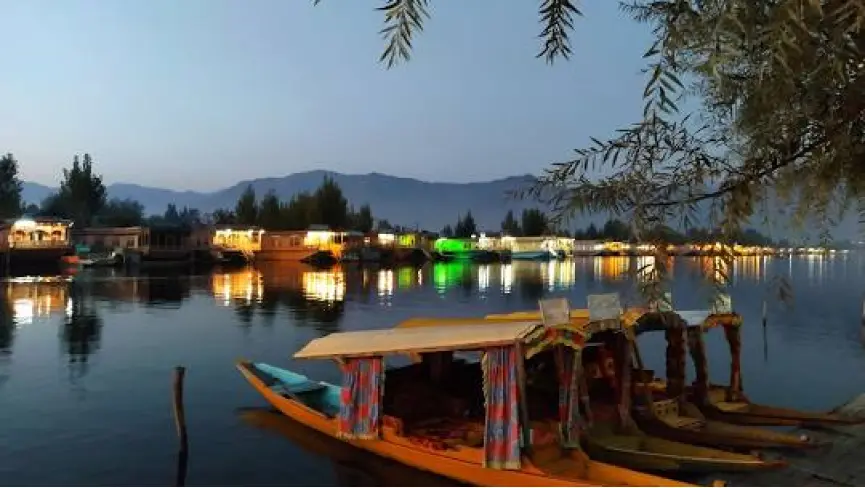
Experience the unique magic of a snow-surrounded lake from the warmth of a traditional houseboat. In January, parts of the lake freeze, turning it into a natural ice rink. Shikara rides in morning mist are ethereally beautiful.
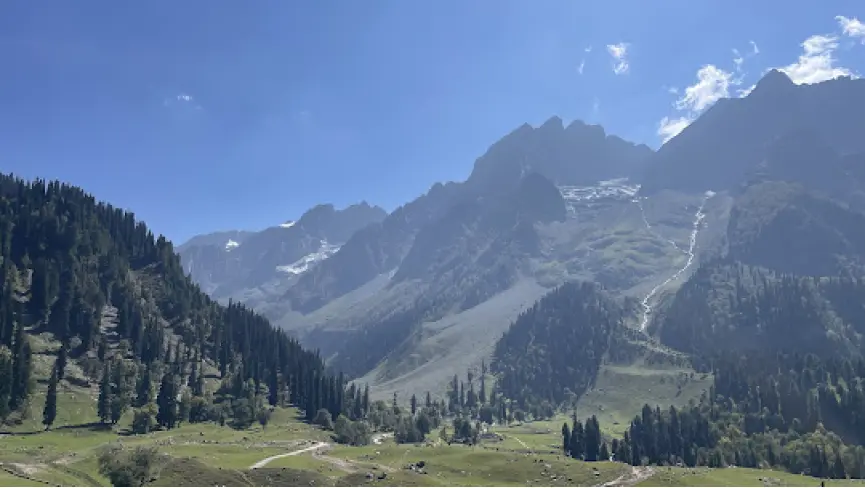
Known as the "Meadow of Gold," Sonamarg transforms into a pristine white wonderland in winter. Road access can be limited, making it a remote, off-the-beaten-path adventure. Glacier views are spectacular.
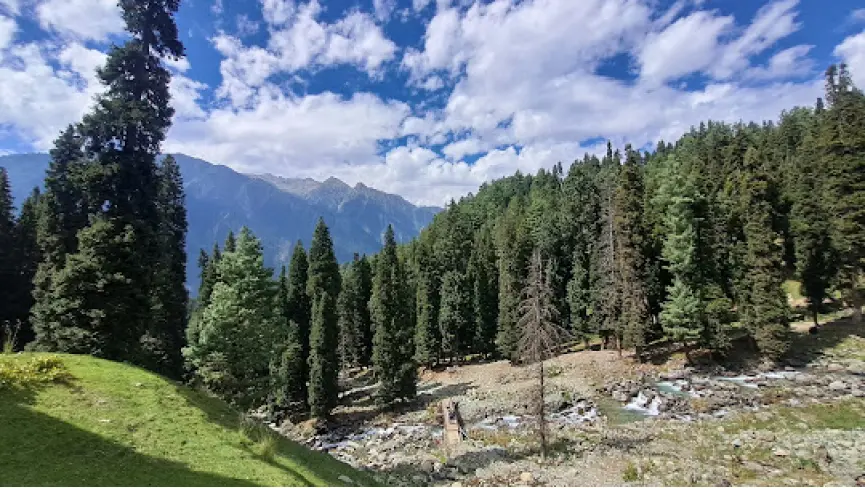
A charming valley town on the banks of the Lidder River, covered in snow during winter. Betaab Valley and Aru Valley are accessible and offer stunning winter landscapes with minimal crowd. Perfect for serene walks.
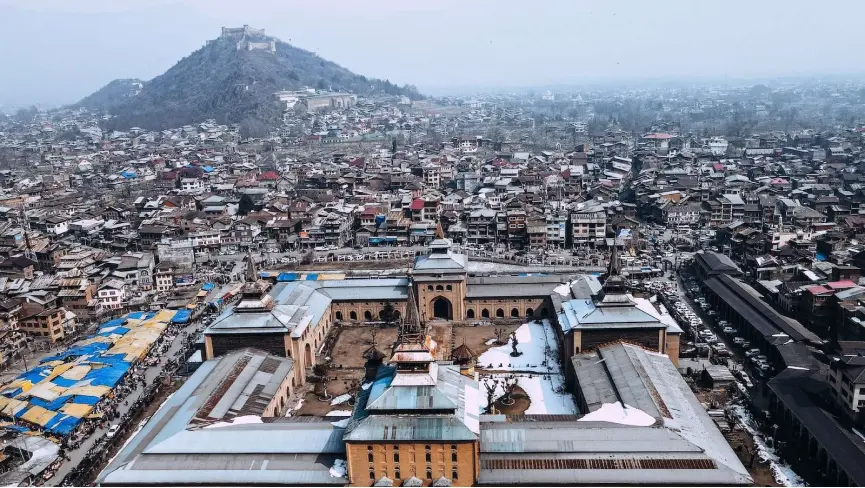
Snow-dusted mosques, wooden shrines, and ancient bazaars of Old Srinagar take on a different beauty in winter. Visit the Jamia Masjid, Shah Hamdan Shrine, and Khanqah-e-Moula while sampling local kangri culture.
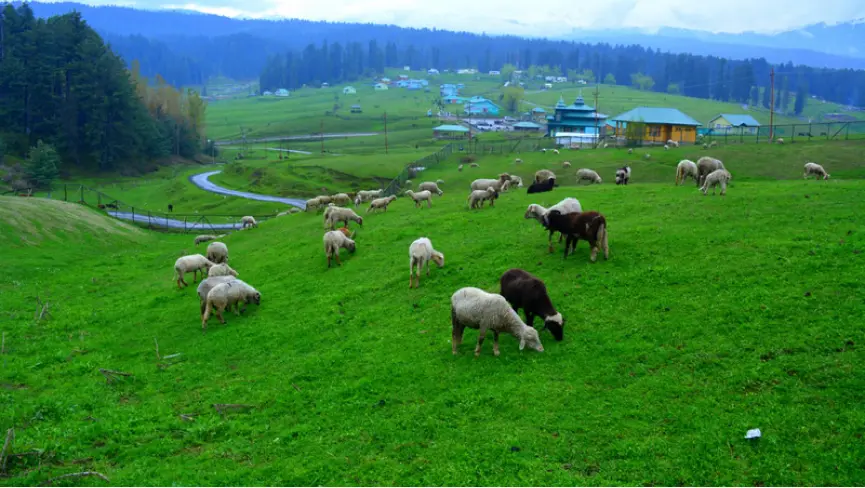
Lesser known but utterly spectacular, Yusmarg is a hidden meadow that remains largely untouched by tourists in winter. Surrounded by Himalayan peaks and dense fir forests, it's a paradise for photographers and peace-seekers.
Winter Activities & Adventures
Kashmir in winter is an adventure playground. Beyond the scenery, there is a rich bouquet of activities that make the trip truly unforgettable:
Skiing in Gulmarg — A Detailed Look
Gulmarg is one of the few places in Asia where you can ski at altitudes above 4,000 meters. The Gulmarg Ski Resort is managed by the Jammu & Kashmir Tourism Department and offers slopes for beginners, intermediate, and advanced skiers. The two-stage Gulmarg Gondola — one of the world's highest — takes you from Gulmarg (2,690m) to Kongdori (3,099m) and then to Apharwat Peak (3,979m).
| Ski Slope | Altitude | Level | Best For |
|---|---|---|---|
| Kongdori Valley | 3,099m | Beginner – Intermediate | Learners, families |
| Apharwat Peak | 3,979m | Advanced | Expert skiers |
| Mary's Shoulder | 3,500m | Intermediate | Freestyle skiing |
| Drung | 2,800m | Beginner | First-timers |
Essential Travel Tips for Winter Kashmir
Travelling to Kashmir in winter requires a bit more planning than a regular hill station trip. Here are the most important tips that will make your journey seamless and memorable:
Fly into Srinagar — Don't Risk Road Access
The Jammu-Srinagar National Highway frequently closes during heavy snowfall. Always book a flight to Srinagar's Sheikh ul-Alam International Airport. Keep a buffer day for weather delays — airlines do cancel flights during heavy snowstorms.
Book Heated Accommodation in Advance
Srinagar houseboats and hotels with central heating fill up fast during the peak December-January period. Look for properties with kangri provision, bukhari (wood-burning heaters), and 24-hour hot water. Always confirm heating arrangements before booking.
Hire a Local Guide — Worth Every Rupee
A knowledgeable local guide can take you to hidden snowfall spots, arrange authentic Wazwan meals, navigate icy roads safely, and give you insight into Kashmiri culture that no guidebook can. Ask your hotel to recommend licensed guides from the J&K Tourism Department.
Get Travel Insurance with Winter Sports Coverage
If you plan to ski, trek, or engage in any snow sport, ensure your travel insurance explicitly covers winter sports and altitude-related medical emergencies. Carry basic altitude sickness medication and a basic first-aid kit.
Download Offline Maps & Emergency Numbers
Internet connectivity can be spotty during heavy snowfall or government-imposed restrictions. Download Google Maps offline, save the Tourist Police helpline (0194-2477543) and BSNL emergency numbers before you leave your home city.
Carry Sufficient Cash — ATMs May Be Unreliable
Many ATMs in remote areas run out of cash or malfunction in extreme cold. Carry enough cash for at least 3-4 days of expenses. Most local shops, dhabas, and shikara operators don't accept cards or UPI in peak winter.
Important: Always check the Jammu & Kashmir Police official advisories and weather bulletins before and during your trip. Keep the Tourist Facilitation Centre (TFC) number handy: 1800-180-7999 (toll-free). Carry a power bank as cold drains phone batteries faster.
Complete Packing Guide for Kashmir Winter
Packing right is half the battle won. Kashmir winters can be brutally cold — layering is the key strategy. Here's what goes in your bag:
Clothing Essentials
| Item | Quantity | Notes |
|---|---|---|
| Thermal inner wear (top & bottom) | 3-4 sets | Merino wool preferred over synthetic |
| Heavy-duty fleece jacket | 2 | Mid-layer, very important |
| Waterproof down jacket / parka | 1 | Outer layer, -20°C rated |
| Snow pants / waterproof trousers | 2 | Essential for Gulmarg |
| Woollen socks | 5-6 pairs | Change daily; damp feet = frostbite risk |
| Waterproof snow boots | 1 pair | Ankle support essential; rent in Gulmarg if needed |
| Woollen gloves + inner liner gloves | 2 pairs each | Double layer for -10°C and below |
| Balaclava / ski mask | 1 | Covers face and neck |
| Woollen beanie / hat | 2 | 30% heat loss is through head |
| Neck gaiter / scarf | 2 | Multi-purpose protection |
Health & Safety Kit
Pack paracetamol, ibuprofen, Diamox (altitude sickness), lip balm with SPF, sunscreen SPF 50+ (snow reflects UV strongly), eye drops, and a UV-protective sunglasses. Snow blindness is a real risk at higher elevations.
Budget & Cost Breakdown
Kashmir in winter is surprisingly more affordable than the summer season, with lower hotel rates and fewer tourist markups. Here's a realistic cost breakdown for a 7-day trip from a major Indian city:
| Expense Category | Budget (₹) | Mid-Range (₹) | Luxury (₹) |
|---|---|---|---|
| Flights (round trip, from Delhi) | 4,000–7,000 | 8,000–14,000 | 15,000+ |
| Accommodation (per night) | 1,000–2,000 | 3,000–6,000 | 8,000–25,000 |
| Food (per day) | 400–700 | 800–1,500 | 2,000+ |
| Local transport (per day) | 500–800 | 1,200–2,000 | 3,000+ (private cab) |
| Gulmarg Gondola (both stages) | ₹840 (Phase 1) + ₹1,040 (Phase 2) | ||
| Skiing (full day package) | ₹2,500–₹5,000 (including equipment) | ||
| 7-Day Total (approx.) | ₹18,000–25,000 | ₹40,000–60,000 | ₹1,00,000+ |
Pro tip: Book flights and accommodation at least 6-8 weeks in advance for December-January travel. Last-minute bookings during peak winter can cost 3x the base price. Look for package deals offered by J&K Tourism on their official portal.